'Nobody told me I had ADHD. They told me I was justifying bad behaviour'
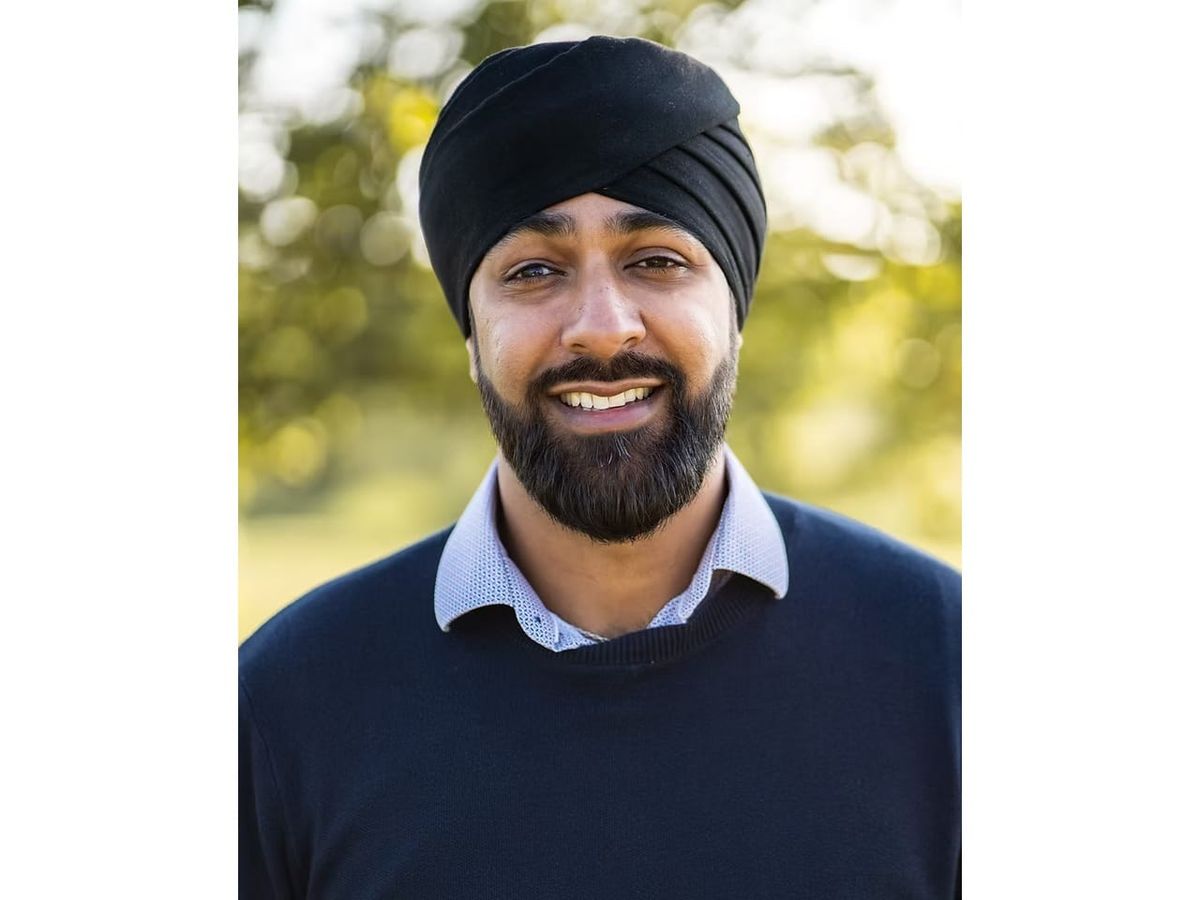
Amit Singh Kalley spent nearly a decade as a senior leader in education before his ADHD diagnosis changed everything
There was a Sunday evening email. No long deliberation, no structured exit plan. Just a message to his headteacher handing in his notice. When they spoke the following morning, the response was blunt: 'What the hell was that? Where's that come from?'
Amit had no clean answer. He just knew he was done.
He walked away from a deputy headship while his wife was pregnant and family finances were precarious. Amit says the decision was impulsive, disruptive and, in retrospect, entirely consistent with a neurodivergent profile he had not yet received a formal diagnosis for.
Seeing yourself in the students
Amit spent nearly a decade in senior school leadership. The signs were there throughout. He simply didn't have the language for them.
'I used to zone in and out of meetings. Sometimes important meetings. Safeguarding.' He describes a lanyard chewed to pieces, sitting on his hands during inset sessions, regularly having to justify what looked to others like poor behaviour. When he began cautiously sharing his suspicions with colleagues, the response was dismissive. 'I was told I didn't have ADHD. That I was just trying to justify poor behaviour.'
What shifted things was working directly with young people who had ADHD diagnoses. 'I started seeing a lot of myself in these students. The ways they behaved — I recognised that I used to, and still did, behave like that.' The recognition built slowly, then decisively. By the time he resigned, he was already convinced. The formal diagnosis — ADHD, OCD and anxiety disorder — came afterwards. 'It was a vindication. Everything I'd been through suddenly made sense.'
The cultural layer
What makes Amit's account distinctive, and particularly valuable for HR professionals thinking about disclosure and inclusion, is the cultural dimension he brings to it.
As a turban-wearing Sikh man, he says he operates in a community where neurodiversity is rarely talked about or understood. The barriers are not just attitudinal but linguistic. 'The main language in our community is Punjabi. There are words that can't be translated. If somebody asks what ADHD is, it's hard enough to explain in English. In Punjabi, when direct translations don't exist, people end up seeing it as a mental illness, or an illness of the brain.'
Gender expectations compound the problem. 'In some parts of our culture, the role of the man is very much: "don't talk about how you're feeling, it's a sign of weakness. Go to work, earn money, look after your family."' Amit pushes back against that framing directly in his own storytelling. 'I always talk about vulnerability being our strength, not our weakness. If men don't talk about their vulnerabilities, they end up being more vulnerable in other ways.'
He is clear that his experience is particular to him, but also that it is far from unique. He has received messages from people managing ADHD in their children, in themselves, and even recognising possible neurodivergence in their own parents: a generation for whom the concept never existed in accessible form. 'I felt a sense of responsibility,' he says. 'To make people feel seen and heard.'
For HR and DEI leads, the implication is direct: disclosure rates among employees from minority ethnic communities may be significantly suppressed by cultural and linguistic factors that standard workplace neurodiversity frameworks rarely address.
What schools get wrong about their own staff
Amit is careful not to generalise beyond his own experience, but his observations about the education sector are pointed. The profession he worked in was, he argues, far better equipped to support neurodivergent students than the adults teaching them.
'There was so much flexibility, so much mitigation for young people, and so little understanding of the impact neurodivergence had on us.'
He believes things have improved since he left, but remains sceptical that improvement has gone far enough. The structural problem, as he sees it, is financial. 'Flexibility often costs money. In the private sector, large companies have budgets set aside for this. In education, leaders feel a huge sense of responsibility towards their employees. They just don't necessarily have the money.'
His counterargument is one HR professionals will recognise. 'Every penny has to be spent on children — that's the argument I always get. But if you develop your staff to be better, to want to stay in the profession, to thrive in it — that is spending money on the children. Those teachers deliver better lessons. They burn out less. They stay.'
The retention point is significant. Amit is one of many experienced educators who left partly because the environment didn't work for how his brain functions. 'Neurodivergent people have a hell of a lot to offer and can make a real difference for young people. But if the system doesn't retain them, that's lost.'
Building a business with an unmedicated ADHD brain
The years after leaving education were not straightforwardly liberating. Amit is honest about the struggle in a way that cuts against the more triumphalist narratives around entrepreneurship and neurodiversity.
'I really, really struggled. I spent a lot of time procrastinating, doing things that weren't actually important — creating social media content, responding to emails. And then living with the guilt at night, thinking: "I did nothing today."' The hyper-focus was there, but it wasn't consistent. 'When I got stuck in, nothing could stop me. But those moments weren't happening enough.'
He is still working through medication options. 'I'm hanging on to the hope that when I find the right medication, it will be a game changer. I'm not there yet. And I'm worried that after lots of trials, I won't get there.' It is an honest account: not the diagnosis-as-revelation story, but the reality of a work in progress.
What did work was eventually narrowing his focus. After years of pivoting between coaching, speaking and various other directions — 'one day I'd want to be a coach, the next a speaker, the next something else entirely' — he found his calling in digital parenting and online safeguarding: helping parents, carers and organisations understand the risks the online world poses to young people.
'Most of my work now comes through referrals,' he says. 'Which means the impact I'm having is good.'
What the workplace can learn
Amit's story carries several threads useful for HR professionals.
The first is about recognition: employees who are masking undiagnosed neurodivergence often present as difficult, distracted or underperforming. Dismissing them, as happened to Amit, compounds the problem and delays support.
The second is about cultural competence: neurodiversity programmes that don't account for the particular barriers faced by employees from communities where the concept is unfamiliar, stigmatised or untranslatable will miss a significant portion of the workforce.
The third is about what retention actually costs. Amit was an ambitious, high-performing leader who wanted to reach headship. He left because the environment couldn't accommodate how he worked. That is a system design problem. And it is one the education sector, and many others, are still working out how to fix.
Amit Singh Kalley is a speaker, coach and digital safeguarding consultant and founder of For Working Parents, where he works with organisations, schools and families on the impact of the online world on children and young people.
Subscribe for free to receive practical guidance on neurodiversity at work, delivered to your inbox