The workplace costs of ignoring dyscalculia
Dyscalculia affects roughly 6% of the UK population. Rob Jennings, co-founder of the Dyscalculia Network, explains what HR teams are missing, and what they can do about it
When Rob Jennings co-founded the Dyscalculia Network, he was a maths specialist teacher watching adults and organisations flood his inbox with the same question: what is dyscalculia, and what do we do about it? The answer was almost always nothing. Not through malice, but through a lack of awareness so complete that most workplaces had never even considered the condition existed.
Dyscalculia is a specific learning difficulty affecting the ability to understand and work with numbers. It is estimated to affect around 6% of the population, roughly the same prevalence as dyslexia. However, it receives a fraction of the attention, research funding or workplace accommodation. For Jennings, the reasons for that gap are both cultural and structural.
'There's an almost universal acceptance that it's okay not to be very good at maths,' he says. 'Parents will say, “I'm not a maths person, they probably get that from me.” Whereas for literacy, even if you couldn't read, it wouldn't be publicly acceptable to say so.'
For Jennings, that social permission to dismiss numerical difficulty has allowed dyscalculia to remain invisible in a way that dyslexia no longer is.
The problem is compounded by how maths is taught. Literacy has evolved to use multi-sensory, contextual methods. Mathematical instruction has remained abstract and theoretical.
'The way we teach maths hasn't kept pace with how we teach literacy,' Jennings says. 'Literacy is all around us. Maths is still seen as almost a scientific subject, removed from daily life.'
Yet the reality is that numerical skills are embedded in everyday tasks most people take for granted, such as cooking, shopping and managing time. It is the disconnect between classroom maths and lived maths that leaves so many people unaware that their difficulties have a name.
What dyscalculia actually looks like at work
For HR professionals, the practical question is not just what dyscalculia is, but how it shows up in the workplace, and how easy it is to miss.
Jennings describes a pattern familiar from his clinical and educational work: employees who avoid certain tasks, decline to engage with spreadsheets, or find ways to sidestep anything involving numbers. The behaviour is often misread as disengagement or lack of capability, when the underlying cause is a combination of genuine numerical difficulty and the maths anxiety that frequently accompanies it.
Maths anxiety is distinct from dyscalculia. It affects a far broader population, including people with no specific learning difficulty. But the two frequently co-occur and can be difficult to disentangle.
'Maths anxiety is an all-encompassing thing that we have to pull back before we can identify what the actual challenges are,' Jennings explains. He describes pensioners in community groups who could still pinpoint the exact moment a teacher's frustration had convinced them they were incapable of maths: a belief that had shaped their relationship with numbers for decades.
In the workplace, that anxiety manifests as avoidance. 'An employee might think, I don't have to do that report, I don't understand the spreadsheet and find ways around it,' Jennings says. In an inclusive environment, the same person might instead feel able to say they need extra support with the numerical elements of their role, and receive it. The difference is entirely down to whether the organisation has created the conditions for that conversation to happen.
Where organisations go wrong
The Dyscalculia Network's website has an entire section dedicated to workplace support, and the queries it receives from organisations tell a consistent story. The most common failure is not a lack of willingness but a lack of awareness. Organisations cannot spot what they do not know to look for.
'A lot of organisations lack the awareness to identify the condition in the first place,' Jennings says. That is compounded by the high rate of co-occurrence between dyscalculia and other neurodivergent conditions. Dyslexia, for example, can affect an employee's ability to understand what a numerical question is actually asking, leading managers to misattribute the difficulty to a maths problem when the real issue is a reading one. ADHD can affect task-switching, making the fluid, multi-demand environment of most workplaces disproportionately difficult to navigate.
'It's a huge area,' Jennings says. 'We're always looking at strengths and challenges, and it's important to understand not just dyscalculia but the whole range of things that might be affecting a person.'
His recommendation for organisations is to move beyond general awareness and towards individual assessment. This would take the form of what he calls an 'assessment for intervention': a structured look at where, specifically, an employee struggles, so that support can be targeted accordingly.
'No two people are the same,' he says. 'Even among people who struggle with maths, the specific areas of difficulty will differ. Blanket adjustments are rarely sufficient.'
A strengths-based approach
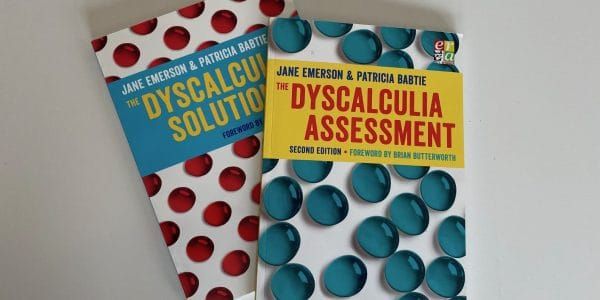
Jennings co-developed a dyscalculia assessment tool built around identifying strengths as well as weaknesses. He believes this framing should fundamentally change how HR teams think about reasonable adjustments.
'All too often, when we assess, we focus on the negatives,' he says. The tool is designed to surface relative strengths alongside areas of difficulty. For example, many individuals with dyscalculia show particular facility with doubling and halving, likely because visual representations of these concepts are so pervasive in everyday life. Understanding those strengths allows support to be built around what an employee can do, rather than simply compensating for what they cannot.
In practical terms, Jennings points to a set of adjustments that are both low-cost and high-impact. Ensuring employees always have access to a calculator. Avoiding putting people on the spot with mental arithmetic: a request that can trigger significant anxiety regardless of whether the person knows the answer. Providing additional training for specific numerical tools such as Excel. And, perhaps most importantly, developing what he calls a workplace passport: a document owned by the individual that sets out their strengths and challenges, accessible to colleagues and managers, and portable across roles and organisations.
'If you get promoted or move to a new team, you shouldn't have to explain everything from scratch,' he says. 'The passport means the organisation already understands how to get the best out of you.'
A condition still waiting for its moment
The Dyscalculia Network operates as a community interest company. This is a stepping stone towards full charitable status. It is volunteer-run, funded by its founders' other work, and driven by something closer to mission than business logic. It provides monthly Q&A clinics, toolkits for London boroughs, training for apprenticeship organisations and support for teaching assistants. It is doing the work that the education and employment systems are still failing to do.
He welcomed the government's recent SEND white paper as a sign of renewed focus on special educational needs, but flagged a significant omission. 'Incredibly, though perhaps not surprisingly, there is almost no specific mention of maths difficulties in the document,' he says. 'That is a shameful omission. If the intention is to move children back into mainstream schooling, the lack of training and awareness around dyscalculia needs to be addressed first.'
Two annual events anchor the network's public calendar: Dyscalculia Day on 3 March, which includes dedicated sessions for parents, adults, workplace professionals and educators; and Maths Anxiety Day on 10 November, focused on identification and support. Both reflect the network's conviction that awareness is the necessary precondition for everything else.
'There isn't the same representation for maths difficulties that exists for other neurodivergent conditions,' Jennings says. 'That's a real gap. And it's one we're trying to close.'
Subscribe for free to receive practical guidance on neurodiversity at work, delivered to your inbox